
Web scraping has become an essential tool for businesses seeking to gather data from the internet efficiently. Whether it's for market research, competitor analysis, or price monitoring, understanding the cost of web scraping is crucial for budgeting and planning. This article explores the various factors that influence web scraping costs, helping businesses and developers make informed decisions.
What is Web Scraping?
Web scraping is the automated process of extracting data from websites. It involves using software tools or scripts to collect information from web pages, which can then be analyzed and used for various purposes. Web scraping is widely used across industries for tasks such as:
- Market Research: Gathering data on competitors, market trends, and consumer behavior.
- Price Monitoring: Tracking pricing changes across different e-commerce platforms.
- Lead Generation: Collecting contact information for potential customers.
- Content Aggregation: Compiling news articles, reviews, or social media posts.
Factors That Influence the Cost of Web Scraping
Several factors determine the cost of web scraping, ranging from the complexity of the website to the volume of data required. Understanding these factors can help you estimate the budget needed for your scraping project.
1. Website Complexity
The complexity of the target website plays a significant role in determining scraping costs. Simple websites with static HTML pages are easier and cheaper to scrape compared to dynamic websites that use JavaScript, AJAX, or require user authentication. Websites with anti-scraping measures, such as CAPTCHAs or IP blocking, also increase the cost due to the additional effort required to bypass these protections.
2. Data Volume
The amount of data you need to extract directly impacts the cost. Scraping a few hundred pages is significantly cheaper than extracting millions of records. Large-scale scraping projects require more computational resources, storage, and time, which increases the overall cost.
3. Data Frequency
How often you need to scrape data also affects the cost. One-time scraping projects are generally less expensive than continuous or real-time scraping, which requires ongoing maintenance and monitoring. Real-time scraping involves setting up automated systems that continuously extract data, which can be more costly due to the need for constant updates and infrastructure.
4. Data Cleaning and Processing
Raw scraped data often requires cleaning and processing before it can be used. This includes removing duplicates, formatting data, and handling errors. The cost of data cleaning depends on the quality of the scraped data and the level of processing required.
5. Legal and Ethical Considerations
Ensuring compliance with legal and ethical standards can add to the cost of web scraping. This includes reviewing the website's terms of service, obtaining necessary permissions, and implementing measures to avoid violating privacy laws such as GDPR or CCPA. Legal consultations and compliance checks can increase the overall cost.
6. Infrastructure and Tools
The tools and infrastructure used for web scraping also influence the cost. Using cloud-based scraping services, proxies, and CAPTCHA-solving services can add to the expenses. Additionally, maintaining servers for large-scale scraping projects requires investment in hardware and software.
Types of Web Scraping Services and Their Costs
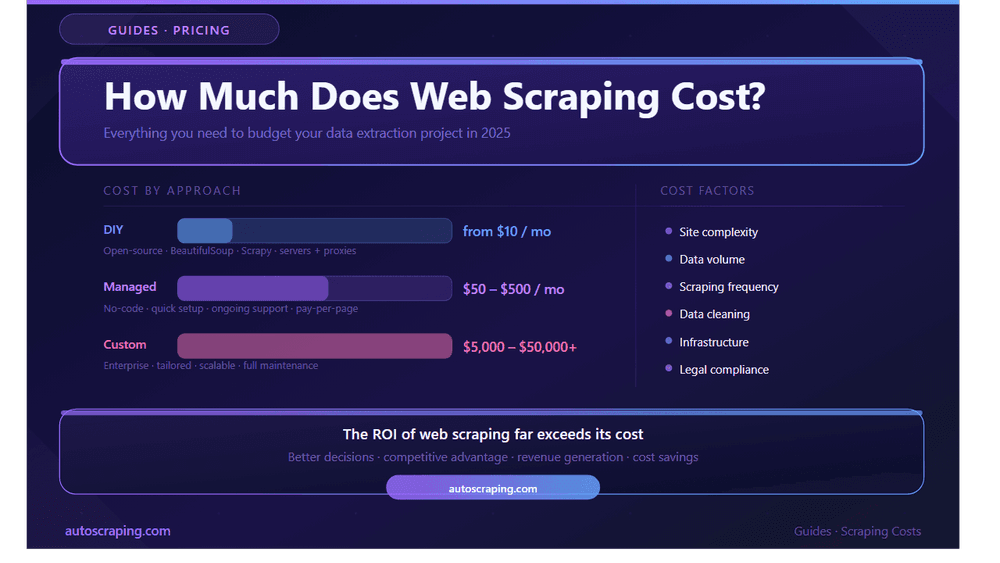
Web scraping services can be broadly categorized into three types: DIY scraping, managed scraping services, and custom scraping solutions. Each has its own cost structure and suitability depending on your needs.
DIY Scraping
Do-it-yourself scraping involves using open-source tools and libraries such as BeautifulSoup, Scrapy, or Selenium to build your own scraping scripts. This option is the most cost-effective if you have the technical expertise to develop and maintain the scraping tools.
Costs:
- Software and libraries: Free (open-source)
- Development time: Variable (depends on complexity)
- Infrastructure: $10-$100/month (for servers and proxies)
Pros:
- Full control over the scraping process
- Cost-effective for small-scale projects
- Flexibility to customize as needed
Cons:
- Requires technical expertise
- Time-consuming to develop and maintain
- May not be suitable for large-scale projects
Managed Scraping Services
Managed scraping services are third-party platforms that handle the entire scraping process for you. These services offer pre-built scrapers, data delivery, and ongoing maintenance, making them a convenient option for businesses without technical expertise.
Costs:
- Subscription fees: $50-$500/month (depending on data volume and features)
- Pay-per-use: $0.01-$0.10 per page scraped
Pros:
- No technical expertise required
- Quick setup and deployment
- Ongoing support and maintenance
Cons:
- Less control over the scraping process
- Can be expensive for large-scale projects
- Limited customization options
Custom Scraping Solutions
Custom scraping solutions involve hiring a development team or agency to build a tailored scraping system for your specific needs. This option is ideal for complex projects that require advanced features and scalability.
Costs:
- Development fees: $5,000-$50,000+ (depending on complexity)
- Ongoing maintenance: $500-$5,000/month
Pros:
- Fully customized to your requirements
- Scalable for large-scale projects
- Ongoing support and updates
Cons:
- High upfront costs
- Requires ongoing investment
- Longer development time
Breakdown of Web Scraping Costs
To provide a clearer picture, here's a breakdown of typical costs associated with web scraping projects:
| Cost Component | Low-End Estimate | High-End Estimate |
|---|---|---|
| Development | $500 | $50,000+ |
| Infrastructure (servers, proxies) | $10/month | $1,000/month |
| Data cleaning and processing | $100 | $10,000+ |
| Legal compliance | $0 | $5,000+ |
| Ongoing maintenance | $50/month | $5,000/month |
How to Optimize Web Scraping Costs
While web scraping can be costly, there are several strategies to optimize expenses without compromising on quality:
1. Start Small
Begin with a small-scale pilot project to test the feasibility and cost-effectiveness of your scraping solution. This allows you to identify potential issues and refine your approach before scaling up.
2. Use Open-Source Tools
Leverage open-source libraries and frameworks to reduce development costs. Tools like Scrapy, BeautifulSoup, and Selenium are powerful and free to use.
3. Optimize Scraping Frequency
Avoid unnecessary scraping by optimizing the frequency of data extraction. For example, if daily updates are sufficient, there's no need to scrape data in real-time.
4. Implement Efficient Data Storage
Use cost-effective storage solutions such as cloud databases or data warehouses to store scraped data. This can help reduce infrastructure costs.
5. Monitor and Maintain
Regularly monitor your scraping processes to identify and fix issues promptly. Proactive maintenance can prevent costly downtime and data loss.
6. Consider Outsourcing
If you lack in-house expertise, consider outsourcing your web scraping needs to a specialized agency. While this may have upfront costs, it can save time and resources in the long run.
Return on Investment (ROI) of Web Scraping
When evaluating the cost of web scraping, it's important to consider the potential return on investment. Web scraping can provide significant value by:
- Improving Decision-Making: Access to accurate and timely data enables better business decisions.
- Competitive Advantage: Monitoring competitors and market trends helps you stay ahead.
- Revenue Generation: Data-driven insights can lead to new revenue opportunities.
- Cost Savings: Automating data collection reduces manual labor and associated costs.
For many businesses, the benefits of web scraping far outweigh the costs, making it a worthwhile investment.
Legal and Ethical Considerations in Web Scraping
Before embarking on a web scraping project, it's crucial to understand the legal and ethical implications. Failing to comply with regulations can result in legal action, fines, and reputational damage.
Key Legal Considerations:
- Terms of Service: Review the target website's terms of service to ensure scraping is permitted.
- Copyright Laws: Avoid scraping copyrighted content without permission.
- Data Privacy Laws: Comply with regulations such as GDPR, CCPA, and other data protection laws.
- Computer Fraud and Abuse Act (CFAA): In the U.S., unauthorized access to computer systems can be illegal under CFAA.
Ethical Best Practices:
- Respect the website's robots.txt file
- Avoid overloading servers with excessive requests
- Do not scrape personal or sensitive information without consent
- Be transparent about your data collection practices
FAQs: Cost of Web Scraping
How much does web scraping cost?
The cost of web scraping varies widely depending on factors such as website complexity, data volume, and scraping frequency. DIY solutions can start as low as $10/month, while custom solutions can cost $50,000 or more.
Is web scraping legal?
Web scraping is legal as long as you comply with the website's terms of service, copyright laws, and data privacy regulations. Always review legal requirements before starting a scraping project.
What tools are used for web scraping?
Common web scraping tools include BeautifulSoup, Scrapy, Selenium, and various managed scraping platforms. The choice of tool depends on your technical expertise and project requirements.
Can I scrape data without coding?
Yes, there are no-code web scraping tools available that allow you to extract data without writing code. These tools are ideal for non-technical users and small-scale projects.
How can I reduce web scraping costs?
To reduce costs, start with a small pilot project, use open-source tools, optimize scraping frequency, and consider outsourcing to specialized agencies.
Conclusion
Understanding the cost of web scraping is essential for businesses and developers looking to leverage data for competitive advantage. By considering factors such as website complexity, data volume, and legal compliance, you can estimate the budget needed for your project. Whether you choose a DIY approach, managed service, or custom solution, web scraping offers significant value when executed correctly. With proper planning and optimization, the benefits of web scraping can far exceed the costs, making it a valuable investment for data-driven businesses.

