
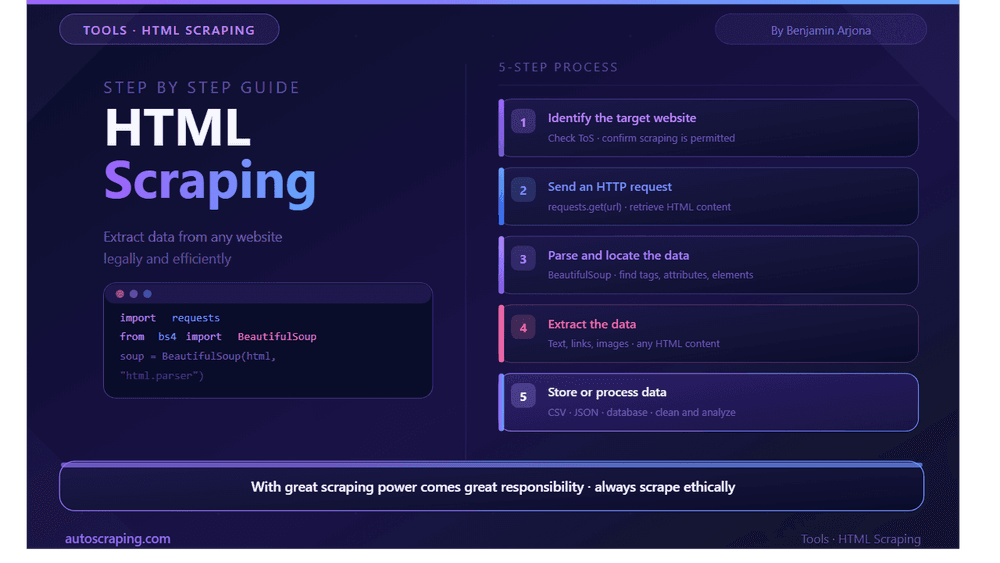
The step by step process to legally extract HTML code from any website
The web interface of web scraping, one of the most widespread yet complex techniques in HTML scraping, might appear unreachable for a beginner. Our analysis of HTML scraping methods used by companies to access information online shows the massive influence of free tools, giving even the most inexperienced users access to modern scraping technology.
The Essence of HTML Scraping
HTML scraping is the process of extracting data from websites by analyzing their HTML structure and content.
1. Access to Raw Data:
HTML scraping allows you to extract data directly from the backbone of a web page. This means you can access information that might not be readily visible through the visual layout.
2. Data Analysis:
By scraping HTML, you can analyze website structure, content organization, and even certain SEO elements by extracting HTML tags, attributes, and nested data.
3. Data Extraction:
HTML scraping enables you to collect specific information such as product details, pricing information, news articles, and much more. This data can then be organized, stored, and analyzed for various purposes.
The HTML Scraping Process
Now, let's discover how the step-by-step process of scraping HTML code may look like:
Step 1: Identify the Target Website
Start by choosing the website from which you want to extract data. Ensure that the website's terms of service permit web scraping.
Step 2: Send an HTTP Request
Use a web scraping tool or library (such as Python's Beautiful Soup or Scrapy) to send an HTTP request to the website URL you want to scrape. This request retrieves the HTML content of the page.
- Once you have the HTML content, parse it using a library like Beautiful Soup. This allows you to navigate the HTML structure and locate the specific elements you want to scrape.
Step 3: Locate the Data
Identify the HTML elements containing the data you want to extract. This can be headings, paragraphs, tables, or any other HTML tags.
Step 4: Extract the Data
Use the scraping tool to extract the identified data. You can extract text, links, images, or any other information contained within the HTML tags.
Step 5: Store or Process Data
Once you've extracted the data, you can store it in a file or a database or process it further for analysis.
- Depending on your project's needs, you might want to clean and format the extracted data before using it for analysis or presentation.
Ethical Considerations
It's very important to note that not all websites permit scraping. Often website owners or law lawyers follow such permission regulations. Web scraping is legitimate if used ethically. While laws and taxes differ based on jurisdictions, some key principles prevail worldwide.
HTML scraping is the gateway to unlocking the wealth of information hidden within web pages. While the process might seem intricate, dedication and understanding transform complex tasks into opportunities. Whether you're a researcher, developer, or entrepreneur, HTML scraping's versatility and data access offer unparalleled potential. Remember, with great scraping power comes great responsibility—always respect website terms and use web scraping ethically.
Conclusion
HTML scraping is the gateway to unlocking the wealth of information hidden within web pages. While the process might seem intricate, dedication and understanding transform complex tasks into opportunities. Whether you're a researcher, developer, or entrepreneur, HTML scraping's versatility and data access offer unparalleled potential. Remember, with great scraping power comes great responsibility—always respect website terms and use web scraping ethically.


