
Mastering the Art of Extracting Valuable Property Market Information Rapidly at a Glance
Since its inception in 2006, Shopify has been a leading e-commerce platform, revolutionizing online retail for both medium-sized sellers globally.
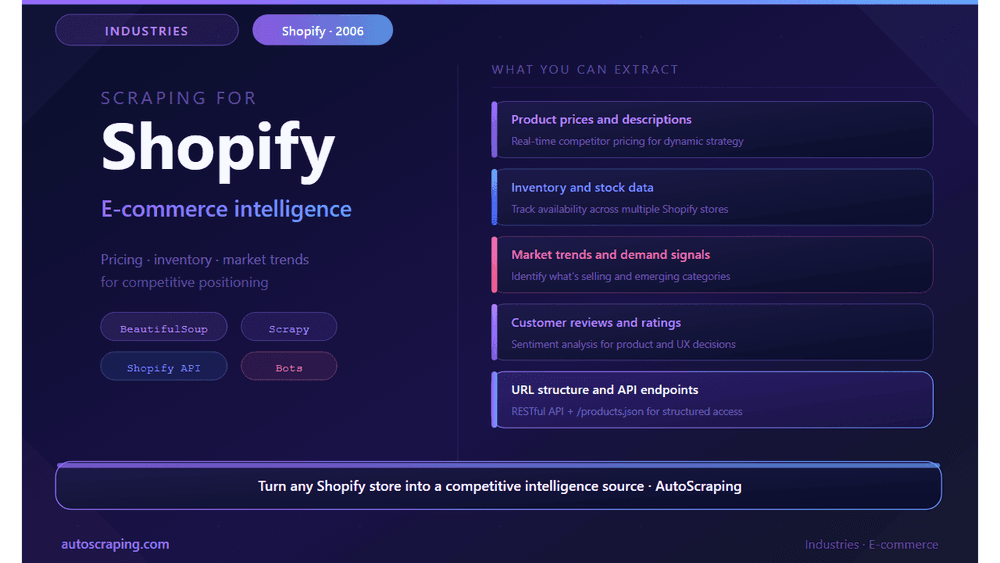
The Importance of Web Scraping in E-commerce: Web scraping has emerged as an invaluable tool in the e-commerce industry, particularly for platforms like Shopify. It allows for timely data collection through pricing strategies, inventory management, and market trends. This data is fundamental for market analysis and competitive positioning, making web scraping indispensable for e-commerce success.
Understanding Shopify Websites
-
Identifying Essential Data: Pinpointing specific needed data like product prices, descriptions, images, and their source is crucial.
-
Selecting Tools and Techniques: Choosing the right tools, such as Python with libraries like BeautifulSoup or Scrapy, which are popular for their efficiency and flexibility.
-
Ethical and Legal Considerations: It's critical to respect the website's terms of service and legal boundaries, ensuring that the scraping activities do not infringe on privacy or intellectual property rights. This includes honoring dynamic content, pagination, and accurate data extraction.
-
Ethical and Legal Considerations: In scraping Shopify, it's vital to adhere to the platform's robots.txt file and terms of service, ensuring legal compliance and ethical practice. Moreover, being mindful of this law, we invite you to access our following content.
Advantages and Challenges of Scraping
Advantages of Web Scraping Shopify:
-
Market Intelligence: Access to real-time data on pricing trends for goods lists would also aid you in employing headless browsers to simulate real user interactions for complex scraping tasks.
-
Handling Data Extraction Challenges: Dealing with redirection, such as api-led structures, urls leads are critical to optimizing data extraction efficiency.
-
Data Post-Processing: After extraction, data cleaning and organization are crucial. Insights are offered on transforming raw data into actionable intelligence.
Implementing APIs for Data Extraction
To effectively extract data from Shopify, one must understand the intricacies of its website structure and API. Shopify stores are generally built around a consistent URL pattern, which can be leveraged to access product information. Here are some detailed steps:
-
Understanding URL Structure: Shopify's admin and storefront APIs have a consistent URL pattern, which can be leveraged to navigate and extract product information. For example, a typical product page might look like this:
.https://store-name.myshopify.com/products/product-handle -
Use Shopify's API: For a more structured and reliable way of extracting data, Shopify's API can be utilized. Shopify provides a RESTful API that allows for extensive data retrieval, though it's important to respect rate limits to avoid being blocked.
-
Automate with Bots: Bots can be programmed to automate the scraping process, though it's important to ensure they are configured correctly and ethically. It should be cloned and deployed when it comes to scale.
-
Handling Pagination and Dynamic Content: Many Shopify stores feature pagination and dynamic content that requires careful handling.
Leveraging Scrapers for Efficient Scraping
Web Scraping Tools and Software: Real scrapers/bots offer unparalleled professional expertise. Hiring expert scrapers can save time, ensure data accuracy, and manage large data volumes. They are adept at navigating technical challenges and providing comprehensive scraping solutions tailored to specific business needs. Engaging expert scrapers offers numerous benefits, aiding in informed business decisions and enhancing competitive positioning. As e-commerce landscapes continue evolving, outsourcing scraping services become increasingly essential for businesses aiming to thrive in the digital marketplace.


